Source eco friendly custom magnetic bookmark for Souvenirs, Home Decoration, and Industrial Magnet
Find 30 options for eco friendly custom magnetic bookmark with varied materials like paper and rubber magnet. Buyers can compare customization, MOQ, and sample times from suppliers in China.
Key considerations
Products List




Comprehensive Sourcing Guide
Strategic Sourcing Guide for Eco-Friendly Custom Magnetic Bookmarks
The global demand for sustainable stationery and promotional items has elevated the profile of eco-friendly custom magnetic bookmarks. These items serve a dual purpose: they function as practical reading aids while acting as durable, reusable branding tools. For procurement professionals, sourcing this category requires a nuanced understanding of material composition, magnetic properties, and the specific definitions of "eco-friendly" within the manufacturing context. This guide provides a structured approach to evaluating suppliers, verifying technical specifications, and ensuring compliance without relying on unverified marketing claims.
Understanding Material Composition and Magnetic Properties
The foundation of any magnetic bookmark lies in the interaction between the magnetic material and the substrate. In the observed market data, materials vary significantly, ranging from paper-based composites to rubber magnets and soft magnetic alloys. A critical distinction exists between "Paper" and "Rubber Magnet" as primary materials. Products described as "Paper/Soft Magnetic" or "Rubber magnet + printing paper" suggest a composite structure where a flexible magnetic layer is bonded to a printed paper face. This construction allows for the "Two-Sided Magnetic" feature observed in several listings, which is essential for holding pages securely without damaging the book spine.
When evaluating the magnetic core, buyers must distinguish between "Isotropic Magnet" and other magnetic types. Isotropic magnets are magnetized in all directions and are typically used in applications where the magnetic field orientation is not fixed, such as in flexible sheets. The presence of "Soft Magnetic" materials often indicates a lower coercivity, making the product easier to shape and cut into custom forms. However, the specific magnetic strength is not explicitly quantified in the provided data. Procurement teams should verify the pull force requirements with the supplier, as a bookmark intended for heavy textbooks requires different magnetic density than one for a thin paperback.
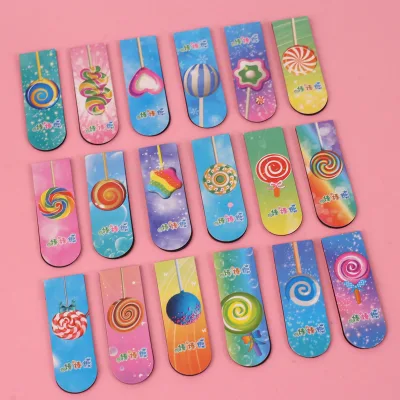
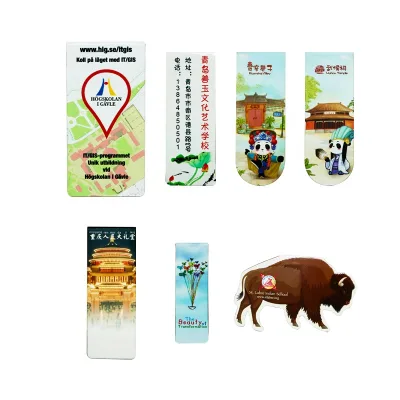
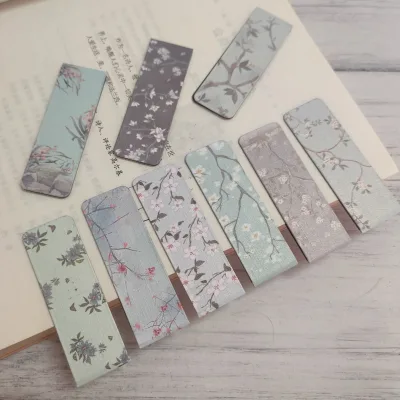
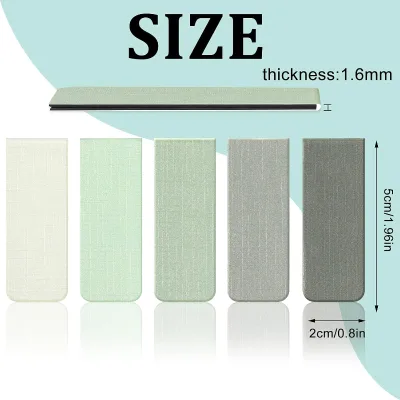
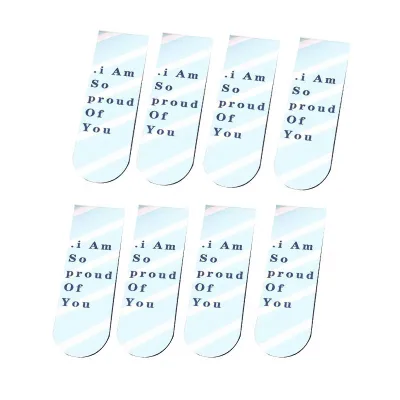
The "Custom Shape" and "Sheet" attributes indicate high flexibility in design. While some models are listed as "Sheet" shaped, others offer "Custom Shape" capabilities, allowing for die-cutting into specific logos or character designs. This customization extends to the "Size," which is frequently listed as "Customized" or "Customized Magnet Size." This variability means that standard dimensions cannot be assumed; every order requires a specific die or mold setup.
Technical Specifications and Customization Capabilities
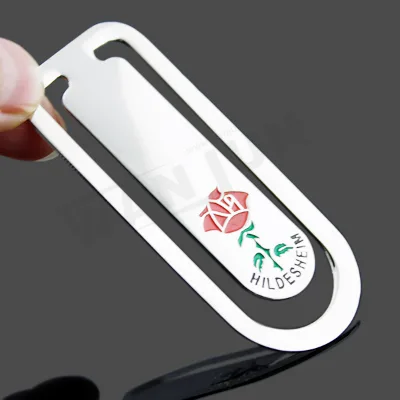
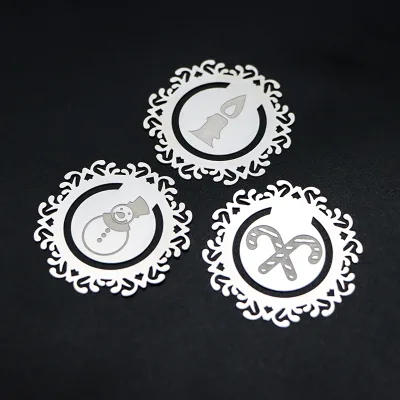
The technical profile of eco-friendly custom magnetic bookmarks is defined by their ability to be tailored to specific branding needs. The "Customized" status appears repeatedly across attributes, covering shape, size, and standard specifications. This high degree of customization is supported by processes such as "Offset printing" and "digital printing," which allow for full-color "CMYK" reproduction. The "Style" can range from "Cartoon" to corporate branding, and the "Plating" options, such as "Silver-Plated" or "nickel free plating," offer additional aesthetic and safety layers.
One of the most critical technical specifications is the "Finished" process, specifically the "nickel free plating" mentioned in the data. This is a significant differentiator for eco-friendly and safety-conscious markets, particularly in regions with strict regulations regarding heavy metals. The "Feature" of being "Eco-friendly" is often linked to the use of recyclable paper and the absence of harmful substances. However, the term "Eco-friendly" is broad. Buyers should look for specific evidence of this claim, such as the use of recycled paper fibers or water-based inks, rather than accepting the label at face value.
The "Sample Time" of "7 Days" is a standard benchmark observed in the data, indicating that rapid prototyping is feasible. This short lead time for samples is crucial for validating the magnetic strength, print quality, and cut precision before committing to a full production run. The "MOQ" (Minimum Order Quantity) varies widely, with observed ranges from 100 to 5000 units. Specific listings mention MOQs of 250, 500, 200, and 1000 pieces. This variance suggests that the cost of tooling and setup is a primary driver of the minimum order threshold. For smaller buyers, finding a supplier with an MOQ of 100 or 200 is essential to manage inventory risk.
Compliance, Certification, and Regulatory Verification
Navigating the compliance landscape for magnetic stationery requires rigorous verification of certifications. The provided data lists "ISO, CE, RoHS" as potential certifications. RoHS (Restriction of Hazardous Substances) is particularly relevant for products containing magnets and plating, as it restricts the use of lead, mercury, cadmium, and other hazardous materials. The "nickel free plating" attribute aligns closely with RoHS and REACH regulations, which are critical for exporting to the European Union and other regulated markets.
While "FSC" (Forest Stewardship Council) is mentioned in the background context, it is not confirmed as a high-confidence fact for the specific products listed. Therefore, buyers cannot assume that a product labeled "Paper" is automatically FSC-certified. To ensure the "Eco-friendly" claim is valid, procurement teams must request proof of certification from the supplier. This includes asking for valid FSC chain-of-custody certificates if the paper content is a key selling point. Similarly, the "ISO" certification should be verified to ensure the supplier adheres to international quality management standards, which indirectly supports product consistency.
The "Standard" is listed as "Customized" or "Customised" in many entries, which implies that the product does not adhere to a single universal standard but rather meets the specific requirements of the buyer. However, this does not exempt the product from general safety standards. For instance, small magnets pose a choking hazard for children. If the bookmarks are intended for use by children or in educational settings, compliance with safety standards regarding magnet size and strength is mandatory. Buyers should explicitly ask if the product meets ASTM F963 or EN71-1 standards, which govern toy safety, even if the product is marketed as a stationery item.
Cost Drivers and Pricing Dynamics
The pricing for custom magnetic bookmarks is influenced by several factors, with the observed range spanning from $0.02 to $10.00 USD. This wide disparity is not indicative of quality differences alone but reflects the complexity of the order. The lower end of the price spectrum likely corresponds to standard sizes, simple "Sheet" shapes, and high-volume orders that amortize the cost of die-cutting and setup. Conversely, the higher prices are associated with complex "Custom Shape" designs, multi-layered materials like "Rubber magnet + printing paper," and lower MOQs that require more intensive handling.
The "MOQ" is a primary cost driver. Orders placed at the 100-unit level will have a significantly higher unit cost compared to orders at 5000 units. This is due to the fixed costs of tooling, machine setup, and quality control checks, which are spread over fewer units in smaller batches. Additionally, the "Sample Time" of 7 days suggests that the production process involves manual or semi-automated steps that cannot be rushed without incurring premium charges.
Printing methods also impact cost. "Offset printing" is generally more cost-effective for large runs due to lower per-unit costs, while "digital printing" offers flexibility for short runs but at a higher price point. The "Plating" process, such as "Silver-Plated" or "nickel free plating," adds an additional layer of cost. Buyers should request a detailed breakdown of costs, separating the base material, printing, magnetic insertion, and finishing processes to understand where the value lies.
Supplier Evaluation and Operational Due Diligence
When evaluating potential suppliers for eco-friendly custom magnetic bookmarks, the "Place of Origin" is a key indicator of supply chain logistics. The data highlights "China" as the primary origin, with specific regions like "Zhejiang" and "Guangdong" noted. These regions are known for their robust manufacturing ecosystems, particularly in stationery and magnetic products. However, the specific location within China can influence lead times and shipping costs.
Supplier reliability is often signaled by their "OEM" (Original Equipment Manufacturer) acceptance and "Customization" capabilities. The fact that "OEM" is "Acceptable" and "Customization" is "Available" across multiple listings indicates a mature supply chain capable of handling bespoke orders. Buyers should verify the supplier's capacity to handle the specific "prod_packing" requirements, such as "1PC/Bag" or "Carton" packaging. Proper packaging is essential to prevent damage to the magnetic strips during transit, especially since "Soft Magnetic" materials can be susceptible to demagnetization or physical deformation if not protected.
The "Sample" availability is a critical step in supplier evaluation. The data confirms that samples are "Avaliable" with a 7-day turnaround. Buyers should insist on receiving physical samples before placing a bulk order to test the magnetic strength, print clarity, and material durability. This step is non-negotiable for ensuring that the "Eco-friendly" materials do not compromise the functional integrity of the bookmark.
Quality Control and Long-Term Procurement Considerations
Quality control in the production of magnetic bookmarks involves multiple checkpoints. The "Feature" of being "Two-Sided Magnetic" requires precise alignment of the magnetic layers to ensure even distribution of the magnetic field. Any misalignment can result in weak holding power or uneven thickness, which affects the user experience. The "Finished" process, specifically the "nickel free plating," must be verified through spot checks or third-party testing to ensure compliance with safety standards.
Long-term procurement considerations include the stability of the supply chain and the consistency of the "Eco-friendly" claims. As regulations evolve, suppliers must be able to adapt their material sourcing and production processes. Buyers should establish a relationship with suppliers who demonstrate transparency in their material sourcing and are willing to provide updated certification documents. The "Standard" being "Customized" means that the supplier must be flexible enough to accommodate changes in design or material requirements over time.
Furthermore, the "Application" of these bookmarks extends beyond "Home Decoration" to "Industrial Magnet" and "Motor Magnet" contexts in some listings, though for stationery, the primary application is clearly "Souvenir" and "Stationery." Buyers should ensure that the supplier understands the end-use environment. For example, bookmarks intended for outdoor use or high-traffic areas may require more durable materials than those for indoor office use.
Comparative Analysis of Product Attributes
To facilitate decision-making, the following table summarizes the key attributes observed in the market data, highlighting the variations that buyers must consider during the sourcing process.
| Attribute | Observed Variations | Procurement Implication |
|---|---|---|
| Material | Paper, Rubber Magnet, Paper/Soft Magnetic | Determines flexibility, durability, and eco-claim validity. |
| Magnetic Type | Isotropic Magnet, Soft Magnetic | Affects magnetic strength and orientation flexibility. |
| MOQ | 100, 200, 250, 500, 1000, 5000 | Directly impacts unit cost and inventory risk. |
| Printing | Offset, Digital, CMYK | Influences color accuracy and cost efficiency based on volume. |
| Certification | ISO, CE, RoHS (FSC unconfirmed) | Essential for regulatory compliance and market access. |
| Packing | 1PC/Bag, Carton | Affects shipping volume and product protection. |
| Origin | China (Zhejiang, Guangdong) | Impacts lead time and logistics costs. |
| Sample Time | 7 Days | Standard for prototyping; allows for quick validation. |
Conclusion
Sourcing eco-friendly custom magnetic bookmarks requires a balanced approach that prioritizes material integrity, regulatory compliance, and cost efficiency. The market offers a wide range of options, from simple paper-based designs to complex rubber magnet composites. Buyers must navigate the variability in MOQs, material definitions, and certification claims to ensure they select a supplier that aligns with their specific brand values and operational needs. By rigorously verifying the "Eco-friendly" claims, testing the magnetic properties, and establishing clear quality control protocols, procurement professionals can secure a supply chain that delivers high-quality, sustainable, and functional stationery products. The key to success lies in detailed due diligence, starting with the sample phase and extending through the entire production lifecycle.
FAQs
What materials are used for eco friendly custom magnetic bookmarks?
Products typically use paper combined with soft magnetic or rubber magnet layers. This composite structure allows for flexible shapes while ensuring the bookmark holds pages securely without damaging the book spine during regular use.
Can I get custom shapes and sizes for these magnetic bookmarks?
Yes, customization is available for both shape and size to meet specific branding needs. Buyers can request custom magnet sizes or sheet shapes, with options for die-cutting into logos or character designs like cartoon styles.
What certifications do these magnetic bookmarks typically hold?
High-confidence listings indicate ISO, CE, and RoHS certifications are available. These standards ensure compliance with safety regulations regarding hazardous substances, particularly important for products featuring nickel-free plating and magnetic components.
How long does it take to receive a sample of the product?
Sample time is typically 7 days for ready-to-ship prototypes. This short turnaround allows buyers to verify magnetic strength, print quality, and material durability before committing to a full production run with a specific minimum order quantity.
What is the minimum order quantity for custom magnetic bookmarks?
Minimum order quantities vary between 100 and 5000 units depending on the supplier and design complexity. Specific listings show MOQs of 100, 200, 250, 500, and 1000 pieces, with lower thresholds often requiring higher unit pricing.
Are these bookmarks suitable for industrial magnet applications?
While primarily used as stationery or souvenirs, some listings note applications in industrial magnets and motors. However, for reading purposes, the design focuses on being two-sided magnetic with isotropic magnet properties for flexible sheet usage.